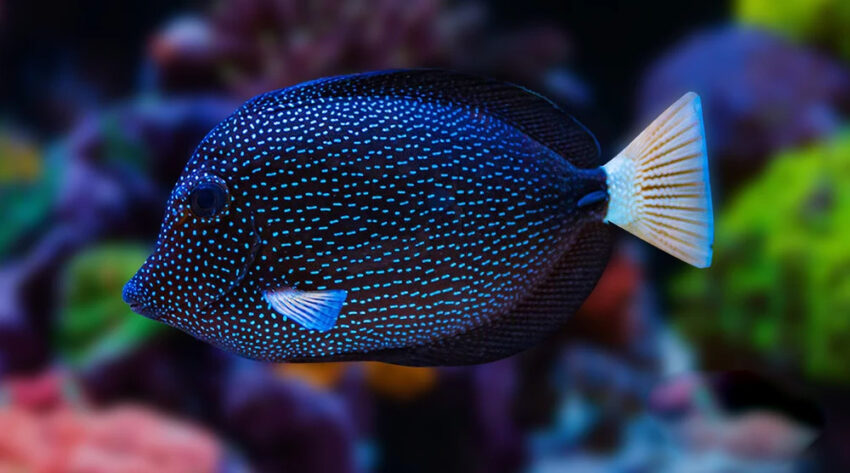
Tangs Fish (Surgeonfish / Tang Fish)
Tangs are a group of colorful saltwater fish that belong to the Acanthuridae family, also known as surgeonfish or doctorfish. They are very popular in marine aquariums due to their bright colors, active swimming behavior, and reef compatibility.
Key Features of Tangs:
- Appearance: Slender, oval-shaped bodies with vibrant colors like blue, yellow, purple, and orange.
- Scalpel Spine: They have a sharp, retractable spine (like a surgeon’s scalpel) near the tail, used for defense.
- Diet: Primarily herbivores, feeding on algae in the wild. In aquariums, they eat seaweed (nori), algae-based foods, and some meaty foods.
- Behavior: Active swimmers; they need lots of open space in tanks.
- Tank Requirement: Minimum 75–150 gallons depending on species, as they grow medium to large (6–15 inches).
- Temperament: Generally peaceful but can be territorial with other tangs.
Popular Species of Tangs:
- Blue Tang (Paracanthurus hepatus) – Also called Regal Tang or “Dory” from Finding Nemo.
- Yellow Tang (Zebrasoma flavescens) – Bright yellow, very hardy, and common in aquariums.
- Kole Tang (Ctenochaetus strigosus) – Brown body with golden stripes, great algae eaters.
- Powder Blue Tang (Acanthurus leucosternon) – Stunning blue body with black face mask and yellow fins.
- Sailfin Tang (Zebrasoma veliferum) – Large dorsal fin and striped body pattern.
Care Tips:
- Provide large tanks with strong water flow and live rock for grazing.
- Keep stable water parameters: pH 8.1–8.4, temperature 24–27°C, salinity 1.020–1.025.
- Feed a variety of algae-based foods to keep them healthy.
- Avoid keeping multiple tangs of the same species unless the tank is very large.
Here’s how Tang fish behave and should be cared for during the winter season — especially if you’re keeping them in an aquarium in Pakistan (where room temperatures can drop quite a bit in winter).
🧊 1. Temperature Sensitivity
Tangs are tropical marine fish, meaning they live in warm ocean waters.
- Ideal water temperature: 24°C – 27°C (75°F – 81°F)
- Below 22°C (72°F) → they may become sluggish, lose appetite, or get sick.
So in winter, you must maintain stable warmth in the aquarium.
✅ Use a reliable aquarium heater (with thermostat)
✅ Place a thermometer in the tank for daily checks
✅ Avoid temperature swings — sudden drops cause stress and diseases like Ich (white spots)
💨 2. Room & Water Stability
Even if your house gets cold, the tank water should remain steady.
Tips:
- Keep aquarium away from windows and cold drafts
- Use a tank cover or lid to reduce heat loss
- If power outages happen, use a backup power source or battery-operated heater
🥬 3. Feeding in Winter
Tangs’ metabolism slightly slows in cooler weather, so:
- Feed small portions twice daily
- Include high-fiber algae-based foods (like nori sheets or spirulina flakes)
- Supplement with vitamin-enriched frozen food once or twice a week for immunity
💧 4. Water Quality & Oxygen
In winter, due to less evaporation, oxygen exchange decreases.
- Maintain good aeration with an air pump or wavemaker
- Continue regular water changes (20% every 2 weeks)
- Test water parameters (pH 8.1–8.4, salinity 1.020–1.025)
⚠️ 5. Watch for Stress Symptoms
Cold or unstable conditions can cause:
- White spots (marine ich)
- Color fading
- Clamped fins or hiding behavior
If seen → check temperature first, then salinity and pH.
💡 In Short:
| Factor | Winter Care Tip |
|---|---|
| Temperature | Keep 24–27°C with heater |
| Feeding | Less but nutritious (seaweed + vitamins) |
| Water | Aerate well, keep stable salinity |
| Tank Location | Away from cold walls/windows |
| Observation | Watch for ich or sluggish behavior |